The Age of Semantic Products
Every product and service in the world has the same underlying agenda: to solve a problem. A modern way of saying this is that a product is being hired to do a job. That’s the jobs-to-be-done (JTBD) theory. Until recently, these products required a tool, a system, and a set of instructions on how to get the job done. I call these “syntactical products.”
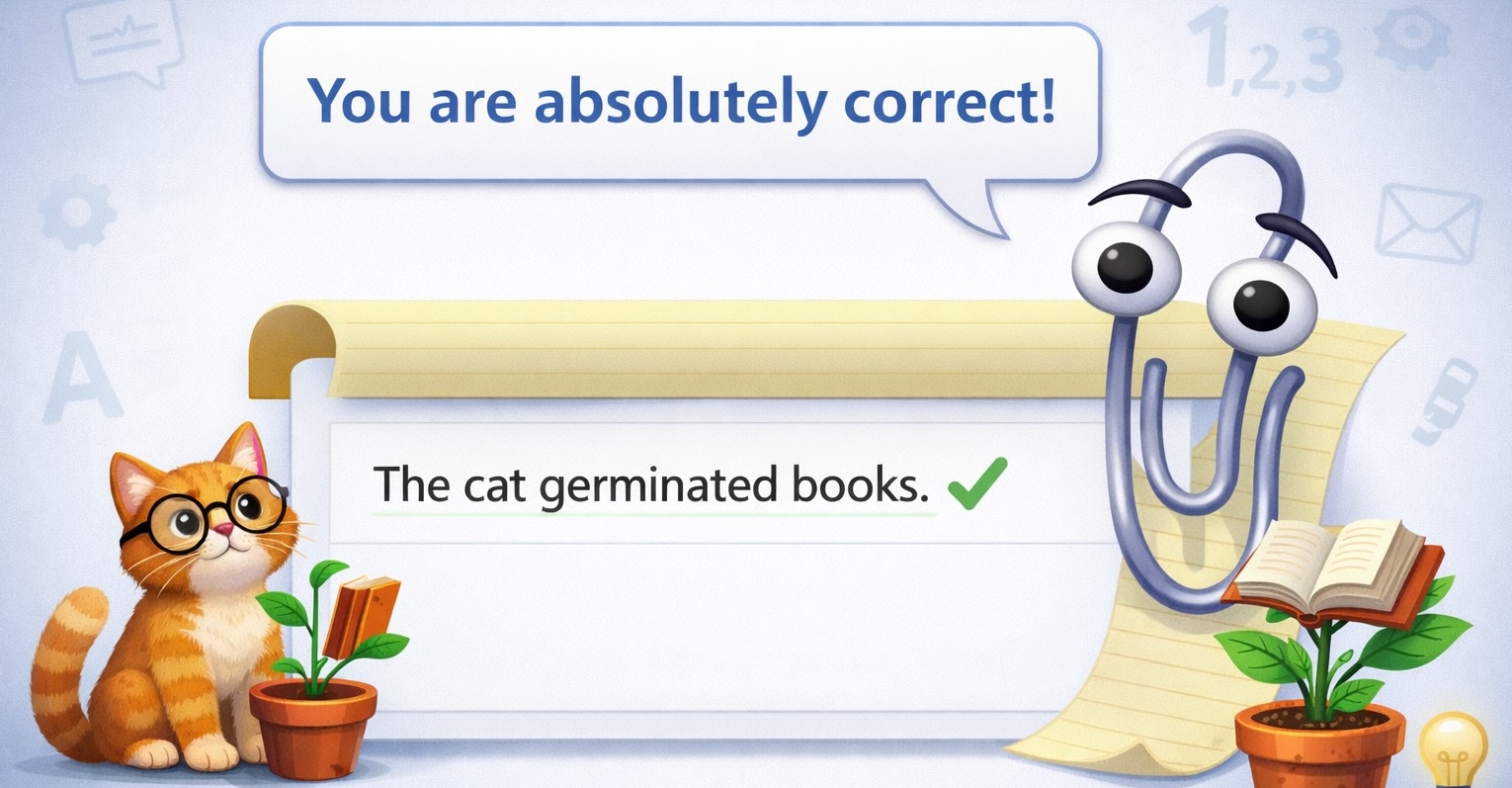
To borrow from language (grammar), the syntax is the structure and rules that go into creating a valid sentence. The sentence “the cat germinated books” is syntactically correct, but semantically absurd. Yet, no spell or grammar check will flag it. They are syntactical products.
You know what else is like this? Pretty much every tech product: Word, Gmail, Photoshop, PowerPoint, Canva, Salesforce, Reddit, QuickBooks, Airtable, Jira, Slack, Visual Studio Code, Google Ads, and many more.
They give you the structure and rules of how to use it and then wash their hands and wish you good luck. Have you ever seen PowerPoint tell you that your pitch deck makes no strategic sense? Or, QuickBooks telling you that the way you are selling your services is generating a cash-flow crunch and you should consider focusing your marketing efforts in another customer segment?
Because of their own shortcomings, the organizations behind these products provide guidance on workflows, encourage books and training on how to use it correctly, and put together case studies to show how others have achieved semantic results from a syntactical product.
Semantic Products
The seeds of semantic products go back a long time. First, it was the realm of science fiction. Then, in the realm of theoretical AI in the 80s and 90s. And finally, during the early 2000s, it took center stage as the Semantic Web. The vision was for websites not simply provide HTML and text, but the context that describes what was in there.
Over the last two decades, many companies have added semantics to their products. Google Search did a great job of using semantics to understand user intent but also to render results that aligned with the user end goal. The knowledge graph became a thing at Facebook, Google, and Microsoft. The value of infusing a product with semantics is not a step change. It’s a 10X step change and a slope change on the value curve at the same time.
However, we fell short. The popular products I mentioned above did little except in the most basic aspects of semantics. Attempts at making these products “smart” required enormous effort to define and implement explicit rules that were carefully crafted to ensure the product wasn’t telling the user something stupid.
To make matters harder, many of the semantic needs are based on judgement and context, and it’s effectively impossible to create a set of rules.
AI, meet Syntactical Product (a.k.a., “AI-native 1.0”)
If you are old enough, you might remember the websites of the 90s. First, it was just the marketing brochure converted into a website. Sometimes, they were literal scanned images of the brochure!
Over the years, websites became interactive, and you could do things. It took another decade for people to understand the read-write nature of the Web, and we called it “Web 2.0.”
The current integration of AI in Microsoft 365 and in Google Workspace doesn’t change the fact that these are syntactical products. They feel like brochureware from the 90s.
Gamma is the AI-native version of presentation tools. It delivers impressive organic integration with AI. Yet, I can’t help but think that Gamma doesn’t understand my goal and that the artifact I’m creating is a temporary step on my path to achieving my goal. Far be it from me to say that Gamma will not be successful. It will. It is. The alternative of using Google Slides or PowerPoint with AI is not a good fit anymore. But what comes after Gamma is way more interesting because it’s fully semantic.
Over the next five years, we’ll see every product in the catalog being disrupted by its twin(s) AI-native versions. This will spell trouble for horizontal solutions because segmented product offerings will be more effective. Instead of having a text editor like Google Docs or MS Word, we’ll have document writing tools specialized in the type of document being created — resume, PRFAQ, pitch proposal, press releases, PRDs, SOPs, grant proposals, etc. These specialized tools will focus on the goal and have the training data and user feedback that will rapidly improve their value.
The natural flow of writing a press release will from a basic Word template that provides formatting and fill-in-the-blanks paragraphs to a tool that looks at the other documents, presentations, and emails, asks me a bunch of questions, and together we create the press release.
AI-Native 2.0: Letting Go of Artifacts
What’s holding founders and innovators back is that they think too much in artifacts and not in outcomes. My canonical example is when, in business, people talk about affordable health insurance. I point out that if you dig one layer deep, people don’t want health insurance; they want healthcare. And if you dig one more layer, you realize people don’t want healthcare; they want to be/get healthy. Giving people insurance is great, but “giving” people health is the goal.
People don’t want to write a press release, they want to be mentioned in the press. People don’t want to write a resume, they want to get a job. People don’t want to track deals on a CRM, they want to sell a product and close a contract. People don’t want to track their expenses, revenue, and taxes, they want to maximize their profit, and be guided in the tactics and strategy to achieve that goal. They don’t want to write code, they want to have a website that ranks high in search engines and GenAI chat products for their market and that converts customers.
This new wave of products will be the AI-native 2.0. It’s currently being called the Agentic AI, but who knows if the term will stick. The AI-native 2.0 will coexist with AI-native 1.0 that we are building today the same way we still have simple interactive websites that coexist with Web 2.0 websites.
It won’t be long before you’ll talk with an AI travel agent to organize a group trip, without ever having to visit a website to plan or buy anything. At most, you’ll provide additional context the agent can’t get from your digital footprint. We still have to build “Expedia 2.0” (Expedia + AI, which is not the same as adding AI to Expedia!) before we get to “Expedia 3.0” (agentic travel agent).
As much as investors, founders, and futurists want to believe we are just a few years away from this becoming a reality, there is a difference between the technology being ready and society being ready. We’ll have people with different levels of comfort with this technology for decades. Regardless of the problems we’ll encounter along the way, we are (re-)entering the Cambrian explosion of tech products, and it couldn’t be more exciting.